


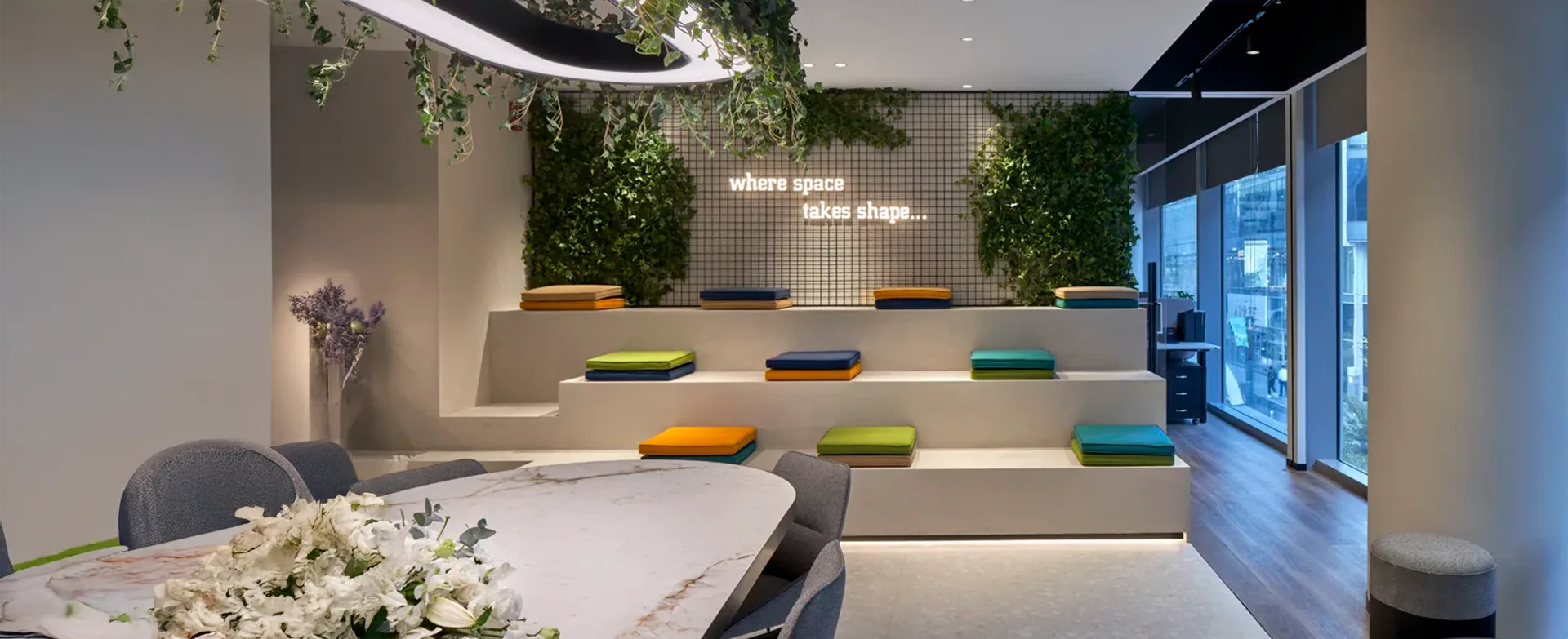
Putting plants in a Dubai office usually ends badly. The aggressive air conditioning, heavily tinted glass, and empty weekends create a hostile environment that kills delicate greenery fast. If you want real plants without the constant replacement costs or the terrible look of dead leaves in your reception area, you have to pick species built for survival. The ZZ plant, snake plant, pothos, and rubber plant are the most effective options for the region. They run on very little water, handle terrible lighting, and filter the indoor air. They keep the workspace looking premium while requiring almost zero attention from your facility management team, making them a key part of Office Interior Landscaping Dubai strategies.
A lot of companies push for indoor greenery during the design phase because it looks great on a mood board. Then reality hits. The AC runs cold all week to combat the Dubai heat, drying out the air completely. Over the weekend, the cooling drops and temperatures fluctuate. Most popular decorative plants simply cannot handle that kind of inconsistency, which is why Corporate Indoor Plant Design UAE is becoming more important in modern office planning. When they inevitably start shedding leaves or turning brown, they ruin the professional aesthetic you paid for during the fit-out. Dead plants in a corporate lobby signal neglect to visiting clients.
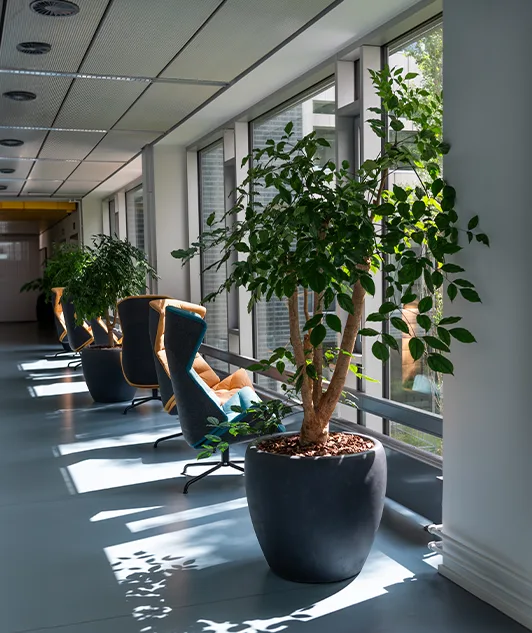
To avoid this, you need tough, structural plants that actually fit into a commercial environment. You also want plants that don’t drop a lot of debris on the floor or require complex feeding schedules, which is a core principle in Sustainable Office Greenery Solutions Dubai.
● Rubber plants give you the visual weight and impact of an indoor tree without the endless maintenance of a fiddle leaf fig. Place them near a window with some indirect, filtered light. They tolerate the dry, chilled office air surprisingly well and look substantial enough to anchor executive suites or boardroom corners.
The biggest mistake companies make is treating office plants like loose furniture. They wait until the fit-out is entirely finished, then scatter a few standalone pots around the floor. That always looks temporary and unplanned.
Effective greenery needs to be planned during the architectural phase. Build planter boxes directly into your custom joinery to utilize dead space. Integrate the pots into your storage units or use them as functional space dividers. Think about the lighting plan early on so the plants actually survive where you put them. Relying on tough, low-maintenance species means you get the visual benefits of an organic workspace, but you don’t turn your operations team into full-time gardeners.