


Dubai healthcare design is undergoing a massive evolution. Creating healing-focused medical interiors is no longer a luxury but a necessity. How a space looks and feels plays a major role in a patient’s healing journey. At Pinnacle Interiors, we believe design can heal, and this blog explores how thoughtful choices in colour schemes, spatial layouts, and lighting can significantly lower patient anxiety.
Why Patient Anxiety Matters
The anxiety of patients isn’t just a psychological element; it has a huge impact on a lot of treatment outcomes, recovery rates, post-treatment success, and overall patient satisfaction.
| Factor | Impact on Patients |
|---|---|
| High-stress environments | 1.5x longer recovery times |
| Calm, natural colours | 30% reduction in self-reported anxiety |
| Efficient, uncluttered layout | 23% improvement in perceived comfort |
| Biophilic design (natural elements) | 33% decrease in blood pressure during waiting |
Source: WHO Healthcare Design Guidelines, Journal of Environmental Psychology, and the American Institute of Architects
It is essential to provide patients with emotionally supportive and soothing spaces that facilitate recovery. Premier interior designers, such as Pinnacle, use these elements purposefully to create healing environments in various ways.
Positivity: Warm colours such as yellows and oranges can be highly uplifting. These are often incorporated in spaces where patients undergo intense treatments to promote optimism and positivity.
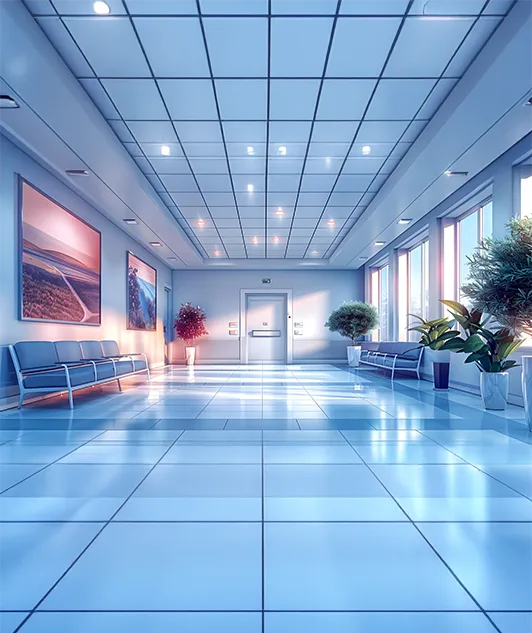
Soothing: Blues and greens have a calming effect (refer to the image below) due to their association with nature. They represent the stretched-out skies and vibrant trees that bestow serenity and epitomize tranquility and relaxation.
Cleanliness: Whites and light pastels convey a sense of sterility and cleanliness, which can boost confidence, especially in examination rooms and operating theatres. An overall sense of well-being sweeps through when patients perceive a space as ‘clean.
What is Colour Psychology?
Colour psychology extends beyond the typical paint; it examines how colours affect the emotions, behaviours, and actions of human beings. A significant and purposefully chosen colour will have a huge impact on patient experiences and on welcoming them.
Cooler tones make cool minds. Softer colours, such as soft blue, green, and muted greys, have been proven to lower blood pressure and heart rates, making these colours ideal for use in recovery rooms, waiting areas, and consultation zones.
| Colour | Psychological Effect | Best Use Case |
|---|---|---|
| Soft Blue | Lowers blood pressure, reduces fear | Waiting areas, recovery rooms |
| Sage Green | Symbolises healing and balance | Consultation rooms, children’s clinics |
| Beige/Cream | Neutralises overstimulation | Reception and admin spaces |
| Dusty Rose | Offers warmth without intensity | Gynaecology, wellness, and maternity clinics |
A very important factor in colour psychology across wellness spaces is to avoid the use of very loud and flamboyant shades. Bright red and neon hues can be triggering for people with high sensitivity levels, which may cause anxiety and high blood pressure in already stressed patients.
| Colour | Potential Effect | Avoid in |
|---|---|---|
| Bright Red | Triggers alertness, linked to blood/danger | Treatment and diagnostic areas |
| Neon Green/Blue | Can overstimulate senses, feel artificial | Waiting zones, paediatric environments |
| Stark White | Feels sterile and cold | Use with warm textures to balance impact |
Instead, the top wellness clinics in premium cities, such as Dubai, focus on incorporating more earthy, natural, and pastel palettes to create a serene and upscale impression, thereby establishing a calm space in crucial areas like clinics and hospitals.
Modern Layouts That Create Flow
In a very stimulating and emotionally overcharged environment, such as a hospital, the layout plays a crucial role. An overcrowded reception or confusing corridor layout can heighten feelings of stress. Some of the key design elements in soothing layouts include: open walkways that reduce claustrophobia, segregated zones that provide more privacy and peace, well-lit corridors, and clear directions that reduce confusion, especially for the elderly.
Modern clinical designs in cities such as Dubai are increasingly incorporating zone-based design, dividing the clinic into functional and emotional zones for privacy, calm, and control.
| Feature | Psychological Benefit |
|---|---|
| Open walkways | Encourages movement and spatial comfort |
| Transparent divisions | Reduce the fear of isolation or uncertainty |
| Rounded furniture | Minimises threat perception and hard barriers |
Importance of Lighting in Layout Design
Another very important factor is the usage of lighting while designing functional spaces in medical environments. Bad lighting and unnecessarily harsh lights can trigger stress (Ref: https://pubmed.ncbi.nlm.nih.gov/33758720/). Consider opting for more natural lighting or fixtures that mimic natural light, especially in waiting areas and recovery rooms, leading to a more positive mindset.
You can personalise the environment by incorporating dimmable LED lights for greater control and comfort. Additionally, subtle and inviting options such as cove lighting can add a soft, calming glow that makes the space feel less clinical and more welcoming. Adjustable lighting mimics natural daylight cycles, inducing alertness during the day and relaxation at night in clinics and hospitals.
We can now plan zones by balancing function and feeling, integrating meaningful colour, lighting, and layout
| Zone Type | Design Focus |
|---|---|
| Reception Area | Warm lighting, soft seating, digital check-in |
| Family Waiting Zone | Acoustically cushioned seating, plants, and ambient music |
| Consultation Room | Private, neutral tones, minimal clutter |
| Treatment & Recovery | Adjustable lighting, clean flow, non-reflective surfaces |
Dubai is soaring sky-high and establishing itself as a global hub of medical tourism, thereby proving that design-led healing is not just aesthetic but strategic. At Pinnacle Interiors, we merge international wellness design standards with a deep understanding of Dubai’s diverse patient demographics. From colour psychology to functional layouts, we deliver spaces that not only look premium but also feel healing.
Want to transform your clinic or hospital into a stress-free, healing space? Let’s design calm.