


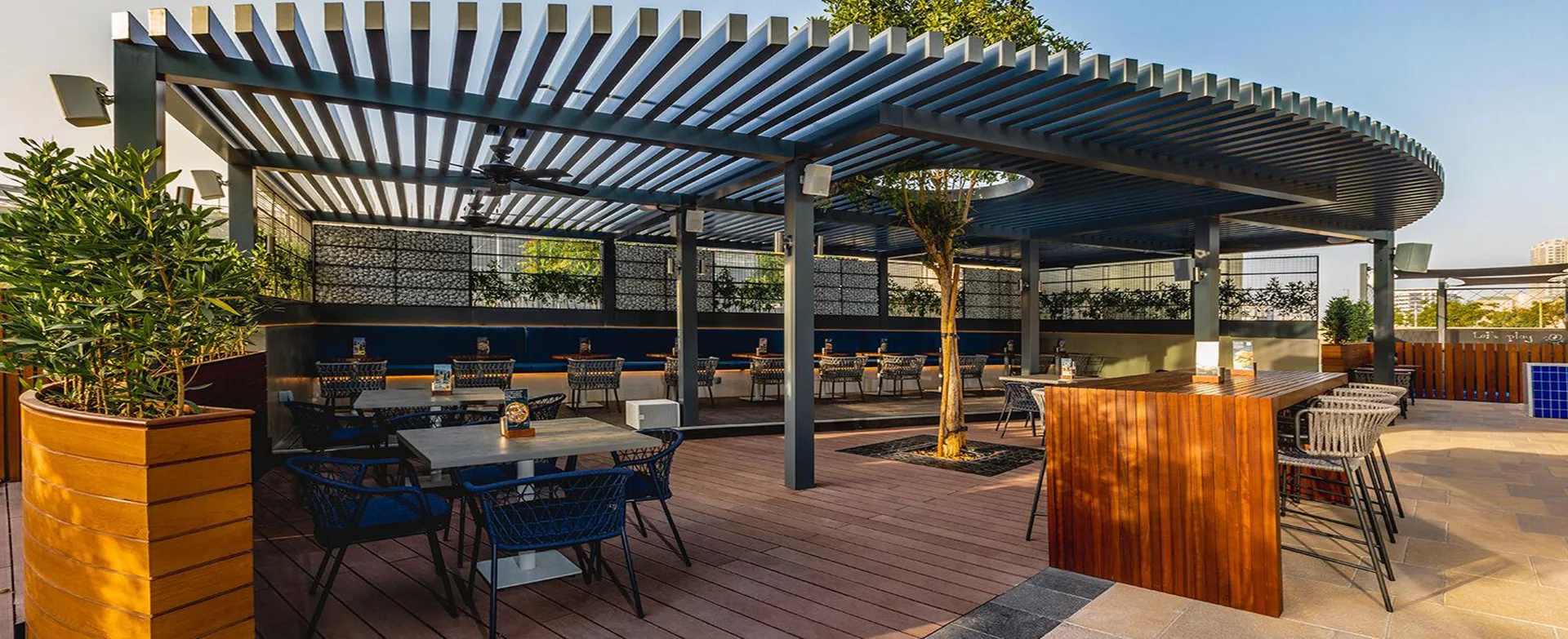
Renovating an outdoor space in Dubai requires planning for severe heat, harsh UV exposure, and fine sand. The most effective Outdoor Renovation Dubai projects focus heavily on climate control, material durability, and functional zoning. To create a space you can actually use, you need to install automated louvered pergolas, lay down Heat-Resistant Outdoor Flooring UAE solutions like composite decking or porcelain tiles, and integrate permanent cooling systems. Successful Luxury Outdoor Living Design Dubai concepts treat the exterior as a direct extension of the interior footprint. It relies on marine-grade materials and structural shade rather than temporary furniture that will degrade in a single summer season.
Designing an outdoor area here is an active fight against the climate. If you just lay down standard paving and put up a canvas umbrella, that space becomes completely hostile from May to October. People make the mistake of treating their villa garden or restaurant terrace like it is located in a mild European climate. You have to design for the reality of the UAE. A proper outdoor renovation requires serious infrastructure.
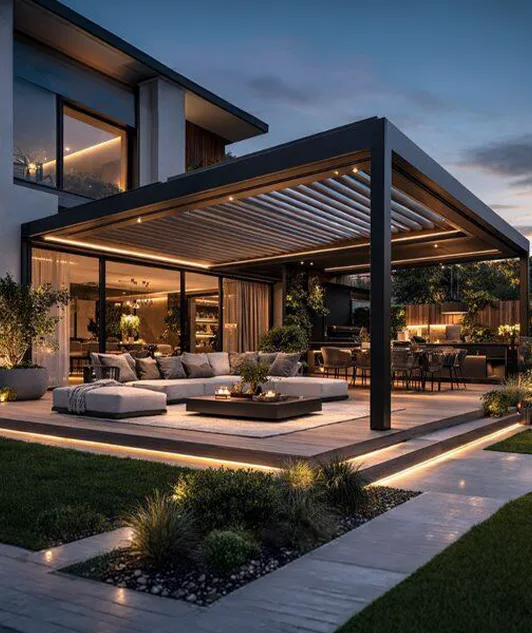
The foundation of any usable exterior space is structural shade. Fabric awnings rip during winter storms and bleach out in the summer sun. You need permanence. Aluminum bioclimatic pergolas solve this problem entirely. They feature motorized louvers that you can open for airflow in December and close completely to block the midday heat in July. When integrated properly, these structures frame the outdoor area, turning an exposed yard into a defined architectural room and creating truly Climate-Controlled Outdoor Spaces.
Flooring is usually where outdoor renovations fail first. Natural wood decks look incredible on the day of handover. Six months later, the intense UV rays and dry air cause the timber to warp, splinter, and fade. You end up trapped in an endless cycle of sanding and re-staining.
For restaurant operators in Dubai, an unusable terrace is a massive loss of revenue. You pay rent on that square footage all year. A smart outdoor renovation encloses the area with retractable glass systems and ties into the main HVAC unit, allowing you to seat guests comfortably even during peak summer.
You also need to engineer the temperature. Passive cooling is great, but active cooling extends the usability of the space by several months. High-pressure misting systems integrated directly into the architectural beams drop the ambient temperature significantly without making the area damp. Plunge pools or moving water features act as natural heat sinks while masking the noise of nearby traffic or AC condenser units.
A high-quality outdoor renovation requires the same level of MEP planning as a primary indoor fit-out. You need to run proper electrical conduits for landscape lighting, establish secure plumbing lines for kitchens, and ensure total drainage compliance. Dropping some patio furniture on a concrete slab is not a renovation. To get a real return on your investment, you have to build a durable, climate-controlled environment that looks exactly as good in the middle of August as it does in January.